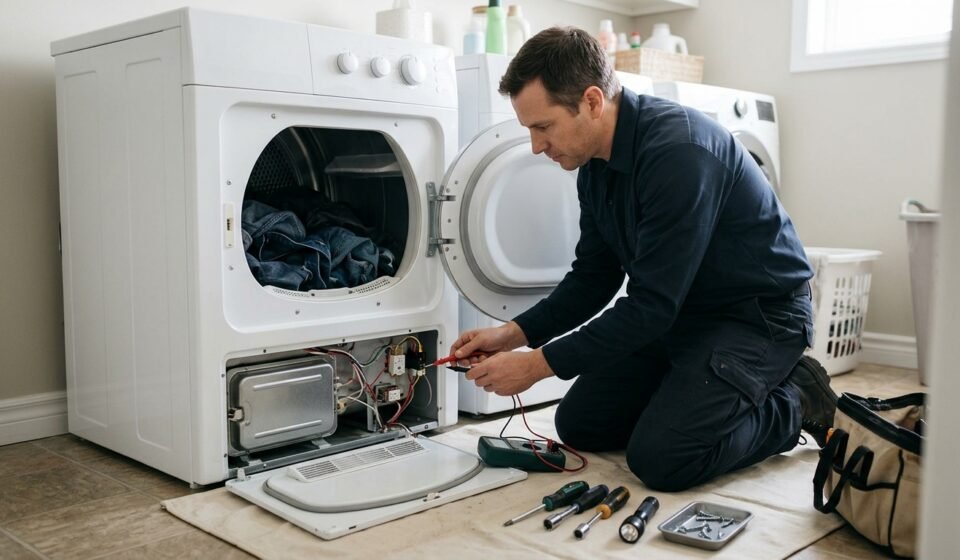

A Whirlpool clothes dryer that runs but does not produce heat can make laundry frustrating and time-consuming. The drum may spin normally, the timer may count down, and the controls may appear to work, yet clothes remain cold and damp after a complete cycle.
Several problems can cause this issue, including an incorrect cycle setting, an electrical supply problem, restricted airflow, a faulty heating element, or a malfunctioning gas burner component. The correct explanation depends on whether you own an electric or gas Whirlpool dryer.
Before replacing any parts, it is important to identify the symptoms and check the simpler causes first. This guide explains why a Whirlpool clothes dryer will not heat, what you can safely troubleshoot, and when professional repair is necessary.
Why Is My Whirlpool Clothes Dryer Not Heating?
A Whirlpool dryer can stop producing heat for several reasons. Some problems involve basic settings or the power supply, while others require testing internal components.
Common causes include:
- Incorrect drying cycle or temperature setting
- Tripped circuit breaker
- Faulty heating element
- Blown thermal fuse or thermal cutoff
- Malfunctioning thermostat
- Restricted exhaust vent
- Faulty gas igniter or gas valve coils
- Damaged wiring or control board
Not every cause produces exactly the same symptoms. For example, a dryer with restricted airflow may still generate heat but take much longer to dry clothes. A failed heating component, on the other hand, may prevent the appliance from producing heat altogether.
Understanding these differences can help you avoid unnecessary repairs.
Check the Dryer Cycle and Temperature Settings
Before inspecting internal components, make sure the dryer is using an appropriate heated cycle.
Whirlpool dryers offer different settings for different fabrics and drying requirements. Some options, such as Air Only or Air Fluff, circulate air without using the heating system.
If one of these settings is selected, the dryer may appear to be malfunctioning even though it is operating as designed.
What to check:
- Confirm that you selected a heated drying cycle.
- Check whether the temperature setting is Low, Medium, or High.
- Make sure Air Only or Air Fluff is not selected.
- Review the control panel for any unusual settings.
- Consult your owner’s manual if you are unsure about a particular cycle.
You can also perform a basic heat check. Whirlpool recommends running an empty dryer on a heated timed cycle for approximately five minutes and checking whether warm air is produced.
If the dryer still produces no heat, continue with the next checks.
Inspect the Circuit Breaker and Electrical Supply
A power supply problem is one possible reason an electric Whirlpool dryer runs without heating.
Many electric dryers use a 240-volt supply for their heating systems. The motor and heating element do not necessarily depend on the same electrical supply connections.
As a result, a dryer may continue spinning even when one side of its electrical supply has been interrupted.
A partially tripped circuit breaker can therefore cause a no-heat problem.
How to check it:
- Turn off the dryer.
- Locate the electrical panel.
- Check the circuit breaker assigned to the dryer.
- If it is tripped, follow the panel manufacturer’s instructions to reset it fully.
- Run the dryer on a heated cycle again.
If the breaker trips repeatedly, stop using the appliance and contact a qualified electrician.
Do not remove electrical panels or test live wiring unless you have the appropriate training and equipment. If the breaker appears normal but the dryer still has no heat, the electrical supply may need professional testing.
Check the Dryer Vent for Blockages
Restricted airflow can cause several dryer performance problems.
When lint, dust, or other debris builds up inside the exhaust system, hot air cannot leave the appliance efficiently. This can cause excessive heat inside the dryer, longer drying times, and potentially repeated thermal protection failures.
A blocked vent does not automatically mean the heating system has failed. However, it is an important issue to investigate, particularly if the dryer previously heated but now takes much longer to dry clothes.
Inspect these areas:
- Lint screen
- Flexible vent hose behind the dryer
- Exhaust duct
- Exterior vent opening
- Areas where lint may collect around connections
Remove lint from the screen after every load. Check that the exhaust hose is not crushed, sharply bent, or disconnected.
If the vent system is heavily blocked, arrange a proper cleaning.
Never operate a dryer with its exhaust system improperly disconnected as a workaround. Restricted airflow can increase overheating and fire risks.
A Faulty Heating Element May Prevent an Electric Dryer From Heating
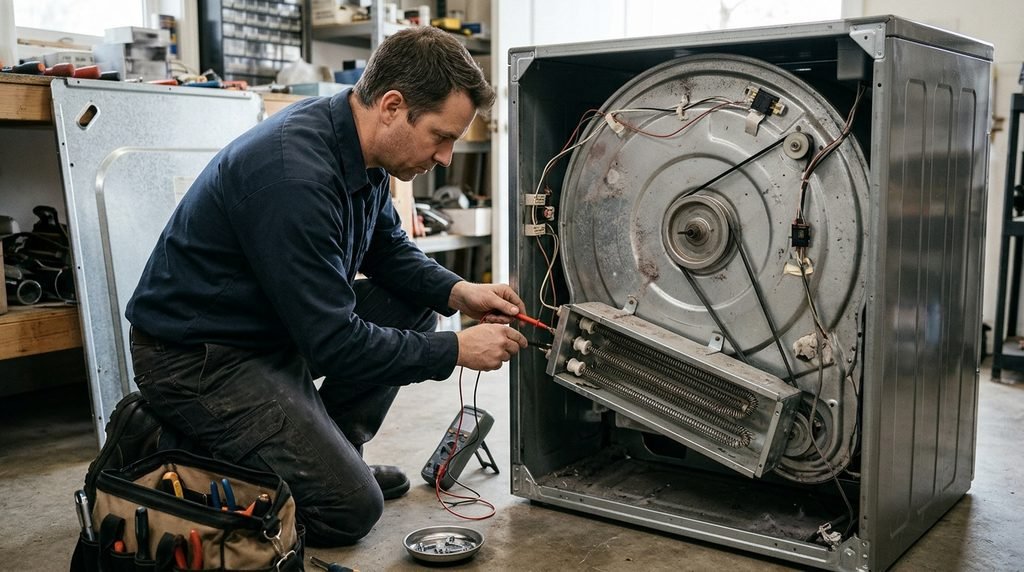
The heating element is one of the main components responsible for producing heat in an electric Whirlpool dryer.
It uses electrical energy to generate the warmth needed to dry clothes. If its heating coil breaks or develops an electrical fault, the dryer may continue tumbling without producing hot air.
Common signs of a faulty heating element include:
- The drum spins normally.
- Clothes remain cold after a heated cycle.
- The dryer produces little or no warm air.
- The heating element fails a continuity test.
A heating element should not be replaced simply because the dryer is not heating. Other components, including the thermal cutoff, thermostats, wiring, and electrical supply, can produce similar symptoms.
A qualified technician can disconnect the appliance from power and test the element with a multimeter.
If the component is defective, replacement may restore heating. Always select a compatible part using the exact Whirlpool model number.
A Blown Thermal Fuse or Thermal Cutoff Can Stop Heating
Whirlpool dryers include safety components that help protect the appliance from excessive temperatures.
A thermal fuse or thermal cutoff may interrupt the heating circuit when temperatures become dangerously high.
One possible reason for this is restricted airflow caused by accumulated lint or an obstructed exhaust duct.
When a thermal safety component fails, the dryer may continue operating while its heating system stops working. The exact symptoms depend on the model and the component involved.
Possible warning signs include:
- The dryer runs but produces no heat.
- Clothes remain damp after a complete cycle.
- The dryer previously experienced overheating.
- A safety component fails a continuity test.
A thermal fuse should be replaced only after the cause of overheating has been investigated.
Installing another fuse without addressing a blocked vent or another underlying problem may lead to another failure.
Never bypass a thermal fuse or thermal cutoff. These components are safety devices, not optional parts.
A Defective Thermostat May Affect Dryer Heating
Thermostats help regulate temperature inside a dryer.
Depending on the model, a Whirlpool dryer may contain a cycling thermostat, high-limit thermostat, or other temperature-control components.
A cycling thermostat helps regulate heating during normal operation. A high-limit thermostat provides additional protection if the temperature becomes excessive.
If one of these components malfunctions, the dryer may experience inconsistent heating or stop producing heat.
Possible symptoms include:
- The dryer heats intermittently.
- The temperature becomes unusually high or low.
- The heating system switches off unexpectedly.
- The appliance does not maintain its normal drying temperature.
Thermostat problems can resemble heating-element or thermal-fuse failures. Proper testing is necessary before purchasing replacement components.
Because the location and specifications of thermostats differ between Whirlpool models, use the appliance’s model number when checking replacement parts.
Gas Whirlpool Dryers May Have an Igniter or Gas Valve Problem
Gas Whirlpool dryers use a different heating system from electric models.
Instead of an electric heating element, a gas dryer uses a burner assembly to generate heat. The igniter and gas valve system are important parts of this process.
If the igniter fails, the burner may not light. Faulty gas valve coils can also prevent the burner from operating correctly.
Possible signs of a gas dryer heating problem include:
- The drum spins but the air remains cold.
- The burner does not ignite.
- The dryer heats inconsistently.
- The appliance stops producing heat during a cycle.
Start with a basic external check: make sure the gas supply is available and the shutoff valve is in the correct position.
Do not attempt to dismantle gas connections or repair the burner assembly yourself unless you are qualified to do so.
If you smell gas, stop using the dryer, avoid operating electrical switches, leave the area, and contact your local gas emergency service from a safe location.
Check for a Damaged Timer, Wiring, or Control Board
Sometimes the heating system is not receiving the correct signals or electrical supply because of a problem with the dryer’s control system.
Depending on the model, the timer, electronic control board, wiring connections, or related components may affect heating operation.
These problems are generally less suitable for basic DIY troubleshooting because they require electrical diagnosis.
A damaged wire, loose connection, or failed control component may interrupt the heating circuit even when the main controls appear to function normally.
A technician can inspect the wiring diagram and test the relevant electrical components to identify the actual fault.
Avoid replacing an expensive control board based only on the fact that the dryer does not heat.
How to Diagnose a Whirlpool Dryer That Runs but Does Not Heat
If your Whirlpool dryer tumbles normally but produces no heat, follow this basic diagnostic sequence.
| Step | What to check | Why it matters |
|---|---|---|
| 1 | Cycle and temperature | Rules out non-heated settings |
| 2 | Five-minute heat test | Checks whether the dryer produces warm air |
| 3 | Circuit breaker | Identifies a possible electrical supply issue |
| 4 | Gas supply, if applicable | Confirms that gas is available |
| 5 | Lint screen and exhaust vent | Identifies restricted airflow |
| 6 | Heating components | Helps identify internal electrical or burner faults |
| 7 | Professional diagnosis | Confirms faults that require specialist testing |
For internal inspections, disconnect the dryer from its electrical supply first. Gas models also require appropriate precautions before any internal work.
If you are unfamiliar with electrical testing, leave component diagnosis to an appliance repair professional.
What If Your Whirlpool Dryer Stopped Heating After a Power Outage?
A dryer that stops heating after a power outage or electrical surge may have experienced a power supply problem or damage to an electrical component.
For an electric Whirlpool dryer, check the circuit breaker first. A partially tripped breaker may allow the drum motor to operate without supplying the correct power to the heating system.
If resetting the breaker does not restore heating, the problem may involve the electrical connection, heating element, thermal protection components, or control system.
A power surge can also damage electronic components, although it should not automatically be assumed to be the cause.
If the dryer smells burnt, produces unusual sounds, or repeatedly trips the breaker, stop using it and arrange a professional inspection.
When Should You Call a Whirlpool Dryer Repair Technician?
Basic external checks can help identify simple problems, but some faults require specialist knowledge.
Contact a qualified technician if:
- The dryer still does not heat after basic checks.
- The circuit breaker repeatedly trips.
- The heating element or thermostat requires testing.
- Internal wiring appears damaged.
- The thermal fuse repeatedly fails.
- The gas burner does not ignite.
- You notice burning smells or unusual electrical noises.
- You are uncertain about safely opening the appliance.
A technician can test the heating circuit, inspect safety components, examine the vent system, and confirm which part needs attention.
This is generally more reliable than replacing several components based on guesswork.
Is It Worth Repairing a Whirlpool Dryer That Will Not Heat?
The decision depends on the appliance’s age, overall condition, repair cost, and availability of compatible replacement parts.
A dryer with a relatively simple electrical or component problem may be worth repairing. However, an older appliance with several failing components may require a more expensive repair.
Consider these factors before making a decision:
- Age of the dryer
- Estimated repair cost
- Condition of the drum, motor, and other components
- Availability of compatible parts
- Warranty coverage
- Energy efficiency of a replacement appliance
If the dryer is relatively new, check its warranty before paying for repairs.
Use the full model number when contacting Whirlpool support or ordering replacement components. Similar-looking dryer models can have different internal parts.
How to Prevent Your Whirlpool Dryer From Losing Heat
Regular maintenance can help reduce the risk of overheating and other dryer problems.
Follow these practical habits:
- Clean the lint screen after every load.
- Inspect the exhaust hose regularly.
- Keep the exterior vent opening clear.
- Avoid crushing or sharply bending the vent hose.
- Do not overload the drum.
- Use appropriate drying cycles for different fabrics.
- Arrange periodic exhaust-system cleaning when necessary.
- Address unusually long drying times before they become serious problems.
Proper airflow is particularly important because excessive lint buildup can contribute to overheating and damage to safety components.
Frequently Asked Questions
1. Why does my Whirlpool dryer run but not heat?
A Whirlpool dryer may continue spinning without producing heat because of a tripped circuit breaker, failed heating element, blown thermal fuse, faulty thermostat, or another heating-system problem. Gas models may also experience igniter or gas valve issues.
2. Does a Whirlpool dryer have a reset button for heating?
Not all Whirlpool dryers have a dedicated heating reset button. If the appliance stops heating, check the cycle settings and electrical supply first. Consult the owner’s manual for model-specific reset instructions.
3. Can a clogged dryer vent stop a Whirlpool dryer from heating?
A clogged vent can restrict airflow and cause overheating, longer drying times, and thermal safety problems. However, restricted airflow does not always explain a complete loss of heat. The heating circuit may need separate testing.
4. How do I know if my Whirlpool dryer heating element is bad?
A defective heating element may cause an electric dryer to run without producing warm air. A technician can disconnect power and perform a continuity test to determine whether the element has failed.
5. Why is my Whirlpool gas dryer blowing cold air?
A gas Whirlpool dryer may blow cold air if the gas supply is interrupted, the igniter fails, or the gas valve coils malfunction. Check the external gas supply first and contact a qualified technician if the burner does not operate.
Conclusion
A Whirlpool clothes dryer that will not heat may have a simple settings or power problem, restricted airflow, or a faulty internal component. Start with basic checks before considering replacement parts. Separate gas and electric troubleshooting, and never bypass safety devices. If the dryer still produces cold air, professional testing can identify the actual fault and help prevent unnecessary repair expenses.
Related Post