

Wet shoes can be frustrating, especially when you need them again the next morning. Putting them in a tumble dryer might seem like the quickest solution, but it can damage certain materials, weaken adhesives, or affect the shape of your footwear.
So, can you put shoes in the tumble dryer? Generally, it is safer to air-dry shoes. Some shoes may be suitable for machine drying, but only when the footwear manufacturer permits it and your tumble dryer provides an appropriate drying method.
This guide explains which shoes should stay out of the dryer, what can happen if you use one, and how to dry footwear faster without unnecessary damage.
Can You Put Shoes in the Tumble Dryer?
In most cases, you should avoid putting shoes directly into a tumble dryer. The combination of heat and repeated movement can damage footwear, particularly shoes made with adhesives, foam, rubber, leather, or delicate synthetic materials.
High temperatures may weaken the glue holding the sole and upper together. They can also cause some materials to shrink, warp, crack, or lose their original shape. Even when the outside of a shoe appears suitable for drying, its internal construction may not tolerate the heat.
However, not every shoe has the same drying requirements. Certain canvas, cotton, or polyester footwear may be suitable for machine drying when the manufacturer’s care instructions specifically allow it.
Before using a tumble dryer:
- Check the shoe’s care label or manufacturer’s website.
- Read your tumble dryer’s instruction manual.
- Confirm whether the footwear can tolerate the recommended temperature.
- Use a suitable drying rack if the appliance manufacturer provides one.
- Avoid assuming that a low-heat setting makes every shoe safe to dry.
If you cannot confirm that your shoes are dryer-safe, choose air drying instead.
What Happens When You Put Shoes in the Dryer?
Putting unsuitable shoes in a tumble dryer can create several problems. The level of risk depends on the materials, construction, temperature, and drying method.
1. The Shoe Glue Can Weaken
Many shoes use adhesives to connect the sole, midsole, and upper sections. Excessive heat can soften or weaken these adhesives, potentially causing the sole to separate from the rest of the shoe.
This is particularly concerning with running shoes, trainers, and footwear containing multiple bonded layers.
2. Shoes Can Shrink or Lose Their Shape
Some materials respond poorly to high temperatures. Fabric uppers may shrink, while foam components can become distorted. The shoe may no longer fit comfortably or provide the same support.
3. Rubber and Foam Components Can Become Damaged
Rubber outsoles and foam cushioning are important parts of many everyday and athletic shoes. Depending on their composition, heat can affect their shape, flexibility, or performance.
A damaged sole or midsole can make footwear uncomfortable and less reliable.
4. The Shoes Can Become Noisy Inside the Dryer
Shoes are heavier and less flexible than ordinary laundry. As they tumble, they can repeatedly strike the drum, producing loud banging sounds.
This noise does not automatically mean the appliance is being damaged, but repeated impacts can create unnecessary stress and may contribute to damage in some circumstances.
Which Shoes Can and Cannot Go in a Tumble Dryer?
Whether footwear can go in a tumble dryer depends on more than its outer material. Adhesives, coatings, cushioning, decorative details, and internal components also matter.
| Shoe type | General recommendation |
|---|---|
| Canvas shoes | Only if the manufacturer permits machine drying |
| Cotton shoes | Check the care instructions before drying |
| Polyester shoes | Depends on the complete shoe construction |
| Mesh trainers | Air drying is generally safer |
| Running shoes | Avoid tumble drying unless specifically approved |
| Leather shoes | Do not tumble dry |
| Suede shoes | Do not tumble dry |
| Rubber-soled shoes | Avoid heat unless the manufacturer approves it |
| Foam-heavy footwear | Air dry unless the manufacturer gives different instructions |
Canvas and Cotton Shoes
Some canvas and cotton shoes can tolerate controlled machine drying. However, their soles, adhesives, and other components may still be sensitive to heat.
Check the manufacturer’s instructions before putting them in a dryer. If machine drying is allowed, follow the specified temperature and drying method.
Synthetic and Mesh Shoes
Synthetic fabrics and mesh uppers are common in trainers and sports footwear. Although some synthetic materials can tolerate limited heat, the complete shoe may contain foam, glue, and other components that cannot.
Air drying is usually the safer choice unless the manufacturer confirms that machine drying is suitable.
Leather and Suede Shoes
Leather and suede should generally never be placed in a tumble dryer. Heat can remove moisture from the material too quickly, leading to stiffness, cracking, shrinkage, or changes in texture.
Use a suitable leather or suede care method and allow the footwear to dry naturally.
Running and Sports Shoes
Running shoes often contain specialised cushioning, foam midsoles, rubber outsoles, and bonded components. These features can be sensitive to heat.
For this reason, air drying is recommended unless the footwear manufacturer specifically approves another method.
Can Shoes Damage a Tumble Dryer?
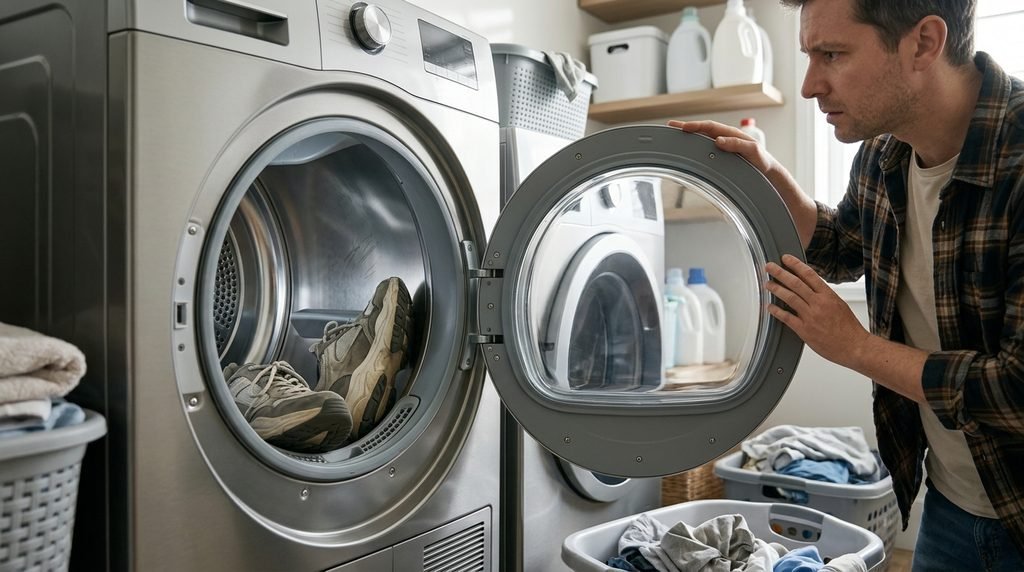
Yes, shoes can potentially damage a tumble dryer, particularly when they are allowed to move freely inside the drum.
Unlike clothes, shoes have rigid soles and heavier structures. Repeated impacts against the drum can create loud noises and put unnecessary strain on the appliance.
Potential problems include:
- Repeated banging against the drum.
- Excessive noise and vibration.
- Movement that interrupts the drying cycle.
- Possible damage to internal components if heavy impacts continue.
A dryer rack, when supported by the appliance manufacturer, can help keep suitable items stationary instead of allowing them to tumble. However, a rack does not remove the risk of heat damage to footwear.
Always check your appliance manual before attempting to dry shoes. If your dryer does not support footwear drying, do not improvise a method that could interfere with the door, drum, or ventilation system.
How to Dry Shoes in a Tumble Dryer If the Manufacturer Allows It
If both your shoe manufacturer and tumble dryer instructions permit machine drying, follow their recommended method carefully.
Step 1: Check the Care Instructions
Confirm that your shoes are suitable for tumble drying. Do not rely on their appearance or material alone.
Step 2: Remove the Insoles and Laces
If the manufacturer recommends it, remove the insoles and laces. This allows the separate components to dry more easily and reduces moisture trapped inside the footwear.
Dry removable components separately using an appropriate method.
Step 3: Remove Excess Water
Use a clean towel to absorb surface moisture. Press gently rather than twisting or squeezing the shoes.
Removing excess water before drying can reduce the amount of time needed.
Step 4: Use an Approved Drying Rack
If your appliance has a suitable shoe or drying rack, use it according to the manufacturer’s instructions. A rack can prevent shoes from repeatedly hitting the drum.
Do not use an ordinary household rack or another object unless the appliance manufacturer confirms that it is safe.
Step 5: Follow the Approved Temperature Setting
Use only the temperature and cycle permitted by both manufacturers. Some footwear may require no heat or a specific low-temperature setting.
Remember that low heat is not automatically safe. If the shoe manufacturer prohibits tumble drying, do not attempt to make it safe by choosing a gentler cycle.
Step 6: Check the Shoes
Inspect the footwear during and after the approved drying process. Stop if you notice unusual smells, deformation, loose soles, or other signs of damage.
If there is any doubt, switch to air drying.
How to Dry Shoes Quickly Without a Tumble Dryer
Air drying is generally the safest option for most footwear. Fortunately, several simple methods can help remove moisture and improve airflow.
1. Use a Clean Towel
Start by removing excess water with a clean, absorbent towel. Gently press the towel against the outside of the shoes.
Avoid twisting or squeezing them, as this may damage their structure.
2. Remove the Insoles
If the insoles are removable, take them out and dry them separately according to their care instructions. This helps air reach the inside of the shoes and reduces trapped moisture.
3. Loosen the Laces
Loosen or remove the laces to open the shoe as much as possible. This improves airflow around the tongue and inside the footwear.
4. Use Newspaper or Absorbent Paper
Place loosely crumpled newspaper or clean absorbent paper inside each shoe. It can help absorb moisture from the lining.
Replace the paper when it becomes damp. Avoid tightly packing the shoes because this can restrict airflow.
For light-coloured footwear, use plain, unprinted absorbent paper to reduce the risk of ink transfer.
5. Place Shoes Near a Fan
A fan can improve air circulation and help moisture evaporate naturally. Position the shoes in a well-ventilated area and allow air to move around them.
Keep them away from direct heat sources.
6. Use Silica Gel Packets
Silica gel packets absorb moisture and can help reduce dampness inside footwear. Place suitable packets inside the shoes and keep them out of reach of children and pets.
Do not use damaged packets or allow the contents to come into contact with the footwear.
7. Consider a Dedicated Shoe Dryer
A dedicated shoe dryer may be useful if you regularly deal with wet footwear. Choose a model designed for your shoe type, with appropriate temperature controls and manufacturer guidance.
It is still important to follow the footwear manufacturer’s drying instructions.
How to Dry Different Types of Shoes Safely
Different footwear materials require different care methods.
- Trainers: Remove excess water, loosen the laces, and allow them to dry in a ventilated area.
- Running shoes: Avoid tumble drying unless explicitly approved. Let the shoes dry naturally to protect their cushioning and construction.
- Canvas shoes: Check the care label. If machine drying is not approved, use absorbent paper and airflow.
- Leather shoes: Wipe away surface moisture and allow them to dry naturally at room temperature. Use appropriate leather-care products when needed.
- Suede shoes: Allow them to dry naturally and use a suede brush after they are completely dry, following the manufacturer’s care advice.
- Rubber footwear: Avoid high heat, which may affect the material’s shape or flexibility.
Never place wet shoes directly against a radiator, heater, open flame, or other intense heat source. Excessive heat can cause damage even when a tumble dryer is not involved.
Common Mistakes to Avoid When Drying Shoes
A few common mistakes can make wet shoes harder to restore or shorten their useful life.
- Using high heat: Excessive temperatures can weaken adhesives and damage footwear materials.
- Ignoring care labels: Different shoes have different construction and drying requirements.
- Drying leather or suede in a machine: These materials are particularly vulnerable to heat-related damage.
- Leaving wet insoles inside: Trapped moisture can slow drying and contribute to unpleasant odours.
- Using direct heat: Radiators and heaters can cause uneven drying and material damage.
- Overlooking the dryer manual: An appliance may not be designed to handle shoes or other heavy items.
- Assuming a pillowcase makes drying safe: A pillowcase may reduce some noise, but it does not eliminate heat damage or guarantee safe operation.
The best approach is to remove excess moisture, improve airflow, and allow the footwear to dry naturally.
Frequently Asked Questions
1. Can You Put Trainers in the Tumble Dryer?
You should generally avoid putting trainers in a tumble dryer. Heat can damage their adhesives, foam cushioning, rubber components, and overall shape. Only use a dryer if the manufacturer specifically approves it and provides suitable drying instructions.
2. What Happens If You Put Wet Shoes in the Dryer?
Wet shoes may shrink, lose their shape, develop damaged soles, or experience weakened adhesives. They can also make loud banging noises as they move around the drum. The extent of damage depends on the shoe’s materials and the drying conditions.
3. Can You Put Shoes in the Dryer on Low Heat?
Low heat may be suitable for certain footwear, but it does not guarantee protection from damage. Check the shoe manufacturer’s instructions and your appliance manual before using any heated drying cycle.
4. How Can I Dry Shoes Overnight Without a Dryer?
Remove the insoles, loosen the laces, and absorb excess water with a clean towel. Put loosely crumpled absorbent paper inside the shoes and place them in a well-ventilated area. A fan can improve airflow and help the shoes dry more effectively.
5. Can Putting Shoes in the Dryer Break the Washing Machine or Dryer?
Shoes are more likely to create problems in a tumble dryer because their hard soles can repeatedly strike the drum. They may cause excessive noise and potentially contribute to appliance damage. Check your appliance manual and use only an approved shoe-drying method.
Conclusion
Putting shoes in a tumble dryer is generally not recommended because heat and repeated movement can damage adhesives, soles, cushioning, and delicate materials. Although some footwear may be suitable for machine drying, you should only use a dryer when the shoe manufacturer and appliance instructions explicitly allow it.
For most trainers, running shoes, leather footwear, and everyday shoes, air drying is the safer option. Remove excess water, take out removable insoles, use absorbent paper, and improve airflow with a fan. These simple steps can help your shoes dry without exposing them to unnecessary heat or mechanical stress.
Related Post



[…] technology. However, not every household needs every feature. Some buyers prefer a simple, affordable machine, while others prioritize energy savings, advanced fabric care, or larger […]