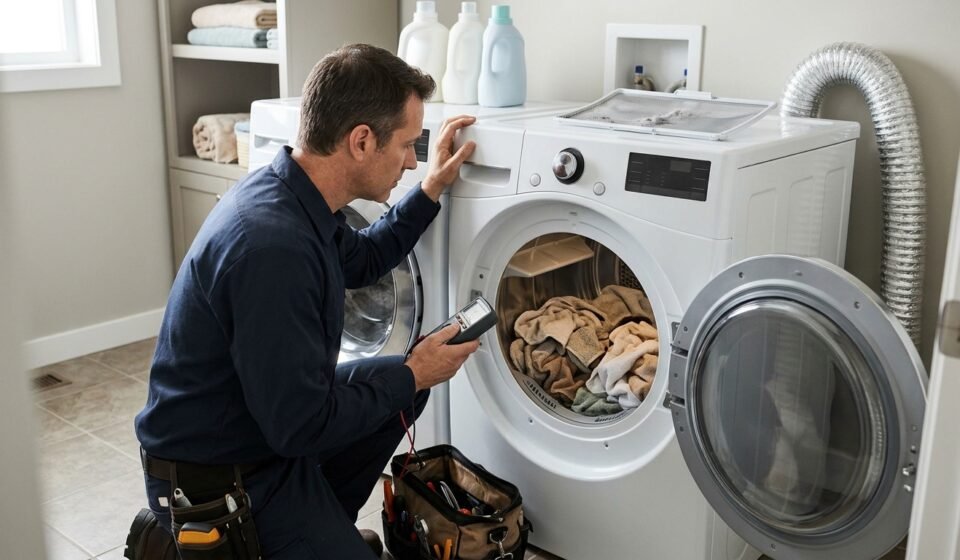

When your dryer runs but does not produce enough heat, your clothes may remain damp even after a complete drying cycle. This problem can happen with electric, gas, condenser, and heat-pump dryers. Sometimes the cause is as simple as an incorrect temperature setting or clogged lint filter. In other cases, a faulty heating element, thermal fuse, thermostat, or electrical connection may be responsible.
Understanding the possible causes can help you identify the problem and avoid replacing parts unnecessarily. This guide explains why your dryer is not getting hot, which checks you can safely perform, and when professional repair is the better option.
Why Is My Dryer Running but Not Getting Hot?
A dryer can continue tumbling clothes without producing heat because its motor and heating system do not always depend on the same electrical or mechanical components.
Common causes include:
- A clogged lint filter or restricted exhaust vent.
- An incorrect drying cycle or temperature setting.
- A tripped circuit breaker or electrical supply problem.
- A faulty heating element in an electric dryer.
- A blown thermal fuse.
- A defective thermostat or thermistor.
- A closed gas supply valve.
- A failed igniter, flame sensor, or gas valve solenoid.
- Damaged wiring or an electronic control problem.
The correct diagnosis depends on whether the dryer produces absolutely no heat or simply does not get hot enough. A dryer that produces some warmth but takes several cycles to dry clothes may have an airflow problem rather than a completely failed heating system.
Common Reasons Your Dryer Is Not Getting Hot
1. Incorrect Dryer Cycle or Temperature Setting
Before investigating internal components, check the selected drying cycle.
Many dryers include settings such as Air Only, Air Fluff, Delicate, Low Heat, and High Heat. Some cycles intentionally use little or no heat to protect sensitive fabrics.
If you accidentally select an air-only or low-temperature setting, the dryer may tumble normally without producing the warmth you expect.
What to check:
- Confirm that the selected cycle is appropriate for your clothes.
- Check whether Air Fluff or No Heat mode is activated.
- Review the temperature setting.
- Make sure any control lock or special operating mode is not affecting your selection.
Try a normal timed or automatic drying cycle with an appropriate temperature setting. If the dryer still produces no heat, investigate the other possible causes.
2. Clogged Lint Filter or Restricted Dryer Vent
A dirty lint filter or blocked exhaust vent can reduce airflow and make clothes take much longer to dry.
When warm, moist air cannot escape properly, the dryer may overheat or activate its temperature-protection system. In some models, restricted airflow can contribute to a thermal fuse failure.
Start by removing lint from the filter after every drying cycle. Also inspect the accessible exhaust hose for crushing, sharp bends, or visible lint buildup.
Signs of an airflow problem include:
- Clothes remain damp after a normal cycle.
- The dryer becomes unusually hot.
- Drying takes much longer than usual.
- The laundry room feels excessively warm.
- The outside exhaust outlet has weak airflow.
Clean the accessible vent system using appropriate equipment or arrange professional vent cleaning if the duct is difficult to reach.
A restricted vent is also a fire-safety concern. Stop using the dryer if you notice burning smells or signs of overheating until the problem has been inspected.
3. Tripped Circuit Breaker or Electrical Supply Problem
An electric dryer generally requires a higher-voltage electrical supply than many ordinary household appliances.
In common US installations, electric dryers use a 208/240-volt supply. Some models can continue running their drum motor when one side of the electrical supply is interrupted, while the heating circuit cannot operate correctly.
This explains why a dryer may tumble normally but produce no heat.
What to check:
- Locate the electrical panel.
- Check whether the dryer circuit breaker has tripped.
- If the breaker is tripped, follow the manufacturer’s and local electrical safety guidance for resetting it once.
- If it trips again, stop using the dryer and contact a qualified electrician.
Do not remove the electrical panel, open the outlet, or test live wiring yourself.
A damaged plug, power cord, terminal block, or receptacle can also interrupt the heating circuit. If you notice melted plastic, scorch marks, sparks, or a burning electrical smell, disconnect power only if it is safe to do so and arrange professional inspection.
4. Closed Gas Supply Valve
Gas dryers use a burner system to produce heat. If the gas supply is interrupted, the drum may continue turning while the appliance produces little or no heat.
A closed gas shutoff valve is one possible explanation.
What to check:
- Confirm that the dryer is connected to its intended gas supply.
- Check whether the accessible shutoff valve is in the correct position according to the appliance instructions.
- Look for an error code or warning indicator.
- Check whether other gas appliances are experiencing supply problems.
Never disconnect a gas line or dismantle the burner assembly to investigate the problem.
If you smell gas, do not operate electrical switches or attempt to restart the dryer. Leave the area and contact your gas emergency service or qualified gas professional from a safe location.
5. Faulty Heating Element
An electric dryer uses a heating element to warm the air circulating through the drum.
Over time, the heating element can break, burn out, or develop an electrical fault. When this happens, the motor may still work even though the dryer cannot produce sufficient heat.
Common warning signs include:
- The drum rotates normally but the air remains cold.
- Clothes stay wet after a complete cycle.
- The dryer previously heated inconsistently.
- A technician identifies an open or damaged heating element.
A heating element should be tested using the correct procedure for the specific dryer model. The appliance must be disconnected from its power supply before any internal component inspection.
Replacing a heating element without checking related components can lead to unnecessary repair costs. A technician should also investigate whether restricted airflow or another overheating condition contributed to the failure.
6. Blown Thermal Fuse
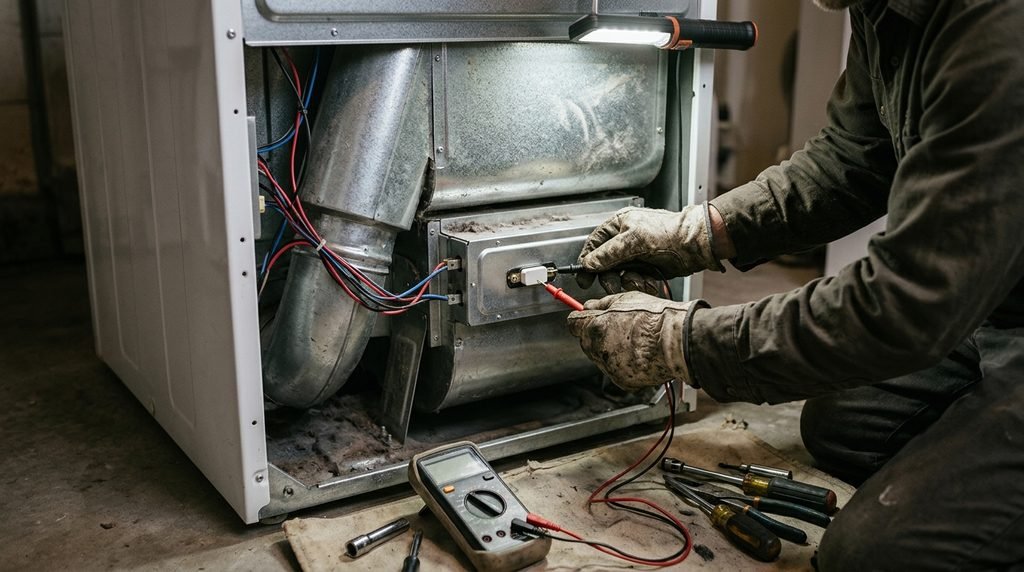
A thermal fuse is a safety component designed to interrupt operation or heating when temperatures become unsafe. Its exact function depends on the dryer model.
If the fuse opens, the dryer may stop heating. On some models, it may also prevent the motor from operating.
One common contributing factor is restricted airflow. A clogged vent or other ventilation problem can cause excessive heat, potentially activating the thermal protection system.
Possible signs include:
- The dryer runs but produces no heat.
- The appliance stops working unexpectedly.
- A technician finds an open thermal fuse during testing.
- The dryer previously showed signs of overheating.
A thermal fuse is not designed to be reset like an ordinary circuit breaker. If it has failed, the underlying cause should be investigated before replacement.
Never bypass a thermal fuse to make the dryer operate. Doing so removes an important safety protection and can increase fire risk.
7. Defective Thermostat or Thermistor
Dryers use temperature-monitoring components to control heating and prevent excessive temperatures.
A thermostat helps regulate temperature by controlling the heating circuit. A thermistor measures temperature and sends information to the electronic control system.
If one of these components fails, the dryer may produce inconsistent heat or fail to activate its heating system correctly.
Possible symptoms include:
- Clothes take longer to dry.
- The dryer becomes hotter or cooler than expected.
- Heating starts and stops unexpectedly.
- The appliance displays a temperature-related error code on supported models.
The thermostat and thermistor are different components, and their testing procedures vary. A qualified technician can check their operation using the manufacturer’s service information and appropriate testing equipment.
8. Failed Gas Dryer Igniter or Flame Sensor
Gas dryers use an ignition system to light the burner and generate heat.
The igniter helps initiate combustion, while the flame sensor detects whether the burner has successfully ignited. If either component fails, the dryer may tumble without producing heat.
Common symptoms include:
- The drum turns but the burner does not produce heat.
- Clothes remain cold and damp.
- The dryer repeatedly attempts to start its heating cycle.
- Heating stops unexpectedly.
The exact ignition sequence depends on the dryer model. Some models use different ignition and flame-detection arrangements.
Gas burner components should be diagnosed by a qualified appliance technician. Do not attempt to ignite the burner manually or dismantle gas connections.
9. Faulty Gas Valve Solenoids
Gas dryers use valve solenoids to control gas flow to the burner.
If a solenoid becomes defective, the dryer may fail to maintain normal burner operation. Depending on the design, the appliance may produce heat briefly and then stop heating.
Possible symptoms include:
- The dryer starts with some heat but becomes cold.
- The burner fails to operate consistently.
- Drying cycles take longer than normal.
- A technician identifies a faulty valve coil during testing.
Gas valve components require proper diagnosis. Replacing them based only on symptoms can waste money because ignition, flame sensing, gas supply, and electrical control problems can produce similar results.
10. Damaged Wiring or Electronic Control Board
The dryer’s wiring and electronic control system coordinate its heating functions.
Damaged wires, loose connections, failed relays, or a defective control board can prevent power from reaching the heating system.
This problem may be more likely if the dryer has recently experienced electrical damage, repeated breaker trips, or unexplained operating failures.
Possible signs include:
- The dryer operates intermittently.
- Heating stops without an obvious reason.
- The appliance displays unusual error codes.
- The control panel behaves unpredictably.
- A technician identifies damaged wiring or a failed electronic component.
Because these faults can involve hazardous electrical connections, internal wiring and control-board repairs should be handled by a qualified technician.
How to Troubleshoot a Dryer That Is Not Heating
If your dryer is not producing enough heat, follow a logical troubleshooting sequence rather than replacing several parts at once.
Step 1: Identify Whether Your Dryer Is Gas or Electric
Check the appliance label, owner’s manual, or model information to identify the dryer type.
This matters because electric and gas dryers use different heating systems.
An electric model may have a heating element and high-voltage electrical supply, while a gas model uses a burner, igniter, flame sensor, and gas valve components.
Step 2: Check the Cycle and Temperature Settings
Select an appropriate heated drying cycle. Avoid Air Fluff, No Heat, or other settings designed for low-temperature drying if you expect normal heating.
Step 3: Clean the Lint Filter
Remove accumulated lint and make sure the filter is correctly installed. Follow the manufacturer’s cleaning instructions, including any guidance about residue from fabric softeners.
Step 4: Inspect the Exhaust Vent
Check accessible ducting for crushing, bends, or lint accumulation. Make sure the exterior exhaust outlet is not obstructed.
If airflow remains weak or the duct is difficult to inspect, arrange professional cleaning.
Step 5: Check the Electrical Supply or Gas Connection
For electric dryers, check the circuit breaker without opening electrical components. If it trips repeatedly, contact an electrician.
For gas dryers, check the accessible shutoff valve and look for warning signs. If you smell gas, leave the area and contact emergency gas services.
Step 6: Arrange Professional Component Testing
If the basic checks do not solve the problem, a technician can investigate the heating element, thermal fuse, thermostat, thermistor, ignition system, wiring, and control board.
This approach is safer and more reliable than purchasing replacement parts based on guesswork.
Why Does My Dryer Get Warm but Not Hot Enough?
A dryer that produces some heat but does not dry clothes properly may have a different problem from one that produces no heat at all.
Common causes include:
- Restricted exhaust airflow.
- Excessive laundry loads.
- Clothes entering the dryer too wet.
- An incorrect temperature setting.
- A faulty temperature-control component.
- A problem with the heating system.
Start by cleaning the lint filter and inspecting the exhaust vent. Avoid overloading the drum, and use a cycle suitable for the fabric.
If the dryer still takes multiple cycles, a technician may need to check its heating and temperature-control systems.
Why Does My Dryer Run but Blow Cold Air?
When a dryer runs normally but blows cold air, the heating system may not be activating.
For electric dryers, possible causes include an interrupted electrical supply, failed heating element, thermal fuse, or control problem.
For gas dryers, possible causes include a closed gas valve, failed igniter, flame sensor problem, or defective gas valve solenoids.
A wrong cycle setting can also produce cold air without indicating a mechanical failure.
If basic checks do not resolve the issue, professional testing can identify the actual cause.
Electric Dryer vs. Gas Dryer: Heating Problems Compared
| Feature | Electric dryer | Gas dryer |
|---|---|---|
| Heating method | Electrical heating element | Gas burner |
| Common heating faults | Element, thermal fuse, thermostat | Igniter, flame sensor, gas valve |
| Power requirements | Electrical supply suitable for model | Electrical supply plus gas connection |
| Common troubleshooting | Breaker, vent, heating circuit | Gas supply, vent, ignition system |
| Professional repair | Electric appliance technician | Qualified gas appliance technician |
Condenser and heat-pump dryers require additional considerations. They may use a condenser, heat exchanger, compressor, or other components depending on the design. Follow the manufacturer’s maintenance instructions rather than applying vented-dryer troubleshooting procedures to every model.
When Should You Call a Professional Dryer Repair Technician?
Professional assistance is appropriate when the dryer continues to produce no heat after basic checks, or when an internal component appears to have failed.
You should also stop using the appliance and seek help if you notice:
- A burning or electrical smell.
- Melted plugs or damaged power cords.
- Repeatedly tripping circuit breakers.
- Excessive overheating.
- Unusual sparks or electrical noises.
- A suspected gas leak.
- Repeated thermal fuse failures.
An electrician may be needed for damaged household wiring, receptacles, or circuit problems. Gas-related faults should be handled by a qualified gas professional or appliance technician authorized to work on the appliance.
How to Prevent Future Dryer Heating Problems
Regular maintenance can reduce the likelihood of heating and airflow problems.
Follow these practices:
- Clean the lint filter after every drying cycle.
- Inspect and clean the exhaust system regularly.
- Avoid overloading the drum.
- Use the correct cycle and temperature for each fabric.
- Keep the area around the dryer properly ventilated.
- Follow manufacturer instructions for condenser and heat-pump maintenance.
- Investigate unusual smells, noises, or overheating promptly.
- Arrange professional inspections when performance changes unexpectedly.
Preventive maintenance helps the dryer operate efficiently and reduces the risk of problems caused by restricted airflow.
Frequently Asked Questions
1. Why is my dryer running but not getting hot?
A dryer may run without heating because of a faulty heating element, thermal fuse, thermostat, electrical supply, or gas ignition component. An incorrect cycle setting or restricted airflow may also affect drying performance. The exact cause depends on the dryer type and model.
2. Can a tripped breaker cause a dryer to run without heat?
Yes. Some electric dryers can continue tumbling when part of their electrical supply is interrupted, while the heating system stops working. If the breaker trips repeatedly, stop using the appliance and contact a qualified electrician.
3. How do I know if my dryer heating element is bad?
A failed heating element may cause an electric dryer to tumble without producing heat. However, similar symptoms can result from a blown thermal fuse, faulty thermostat, or electrical problem. Proper component testing is necessary before replacing the element.
4. Can a clogged dryer vent stop my dryer from heating?
A restricted vent reduces airflow and can cause overheating or poor drying performance. It may also contribute to thermal protection problems. Clean the lint filter and maintain the exhaust system regularly to reduce these risks.
5. Is it safe to use a dryer that is not getting hot?
It depends on the cause. A wrong cycle setting may be harmless, but burning smells, overheating, damaged electrical connections, repeated breaker trips, or suspected gas leaks are warning signs. Stop using the dryer and arrange appropriate professional inspection.
Conclusion
When your dryer is not getting hot, the cause may be a simple setting, restricted airflow, electrical problem, or faulty heating component. Start with safe checks before considering repairs. Electric and gas dryers require different troubleshooting methods. Never bypass safety devices or ignore burning smells. Professional diagnosis can prevent unnecessary replacements and help restore reliable drying performance.
Related Post



[…] an AccelerCare drying system, steam options, and Wrinkle Shield Plus. Understanding its features, operating cycles, and maintenance requirements can help owners get better performance from the […]