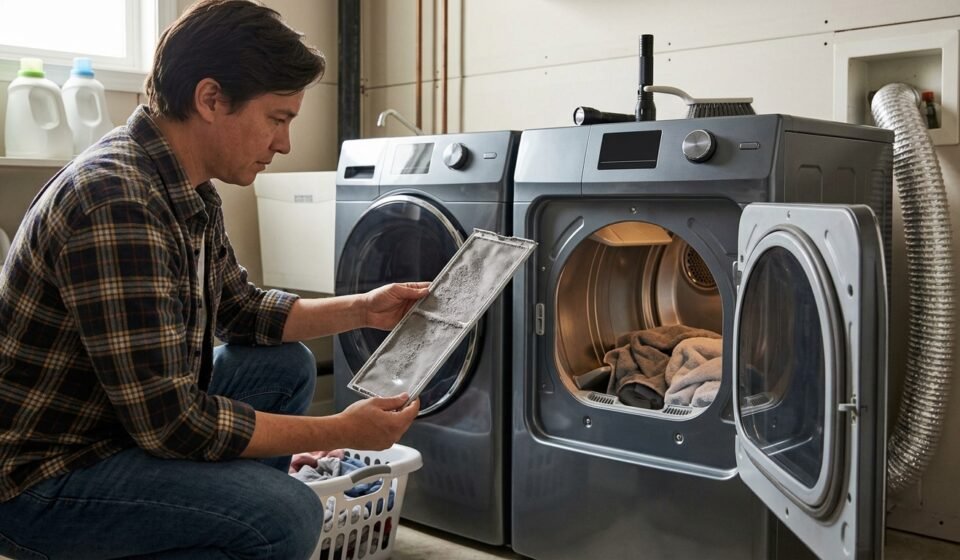

Gas dryer repair starts with identifying the problem. If your gas dryer runs but does not produce heat, refuses to start, takes too long to dry clothes, or makes unusual noises, several different faults could be responsible. Some problems can be addressed through basic maintenance, while others require a qualified appliance repair technician.
Before replacing any parts, check the symptoms carefully. A gas dryer that runs without heat, for example, may have an ignition problem, a gas-supply issue, a blocked exhaust vent, or a faulty safety component. Identifying the cause is more useful than replacing parts based on guesswork.
This guide explains common gas dryer problems, what you can safely check at home, when professional repair is necessary, and how to decide whether repairing an older dryer is worthwhile.
Important Safety Precautions Before Gas Dryer Repair
A gas dryer uses combustible fuel to generate heat and electrical components to operate its motor, controls, and ignition system. Incorrect repairs can create fire, electrical, or gas-leak hazards.
Follow these precautions before troubleshooting:
- Never open or repair the gas burner assembly unless you have the appropriate training and equipment.
- Do not bypass a thermal fuse, door switch, flame sensor, or other safety device.
- Disconnect electrical power before performing any maintenance that requires access to internal components, following the manufacturer’s instructions.
- Do not work on gas fittings or connections if you are not qualified to service them.
- Stop using the dryer if you notice smoke, scorching, unusual overheating, or a burning smell that cannot be explained by a harmless external cause.
If you smell gas, stop using the dryer immediately. Do not light flames or operate electrical switches. Leave the area and contact your gas utility or emergency service from a safe location. Do not continue troubleshooting until the situation has been assessed.
Gas Dryer Runs but Does Not Heat
One of the most common gas dryer complaints is a drum that rotates normally while the clothes remain wet. The motor may be working even though the heating system is not.
Several problems can cause this symptom.
Possible causes
Igniter problem: The igniter helps initiate combustion in many gas dryers. If it fails, the burner may not ignite and the dryer will not produce normal heat.
Gas valve coil failure: The coils control the gas valve. Weak or failed coils may prevent the burner from operating correctly.
Flame sensor fault: The flame sensor helps the dryer detect burner ignition. If it does not function properly, the heating sequence may fail.
Thermal fuse or thermostat problem: These safety components help protect the appliance against excessive temperatures. A failed component may interrupt heating or prevent operation, depending on the design.
Gas supply issue: A supply interruption or closed gas shutoff valve can prevent the burner from receiving fuel.
Blocked exhaust vent: Restricted airflow can cause overheating and poor drying performance. The dryer may also stop heating or shut down if a safety device responds to excessive temperature.
What you can check safely
Start with the simple external checks:
- Confirm that the dryer is connected to its required electrical supply.
- Check that the cycle and temperature settings are appropriate for the load.
- Inspect and clean the lint screen.
- Look for visible crushing or kinks in the exhaust duct.
- Check whether the outside exhaust vent appears blocked, provided it is safely accessible.
- If you suspect a gas-supply problem, stop troubleshooting and contact a qualified professional.
Do not assume that a particular component has failed based on the absence of heat alone. An appliance technician can test the ignition system and safety components to determine the actual cause.
Gas Dryer Will Not Start
A gas dryer that does not start at all may have a power, control, door-switch, or mechanical problem. Although it uses gas for heat, the appliance still needs electricity to operate its motor and controls.
Check the basic settings
Make sure the door closes completely and that the selected cycle has been started correctly. Some dryers will not operate if the door is not securely closed or the control lock is active.
Next, check the electrical connection and household circuit protection. If the outlet, plug, or cord shows signs of damage, stop using the dryer and arrange a qualified inspection.
Possible internal causes
If the basic checks do not resolve the problem, possible causes include:
- A faulty door switch.
- A failed push-to-start switch or control.
- A blown thermal fuse.
- A defective electronic control board.
- A failed drive motor.
- An internal wiring problem.
These faults can produce similar symptoms, so replacing a switch or fuse without proper testing may waste money and leave the underlying problem unresolved.
If the dryer remains completely unresponsive, a technician can inspect the electrical and control systems and determine whether a repair is necessary.
Gas Dryer Starts but Stops During the Cycle
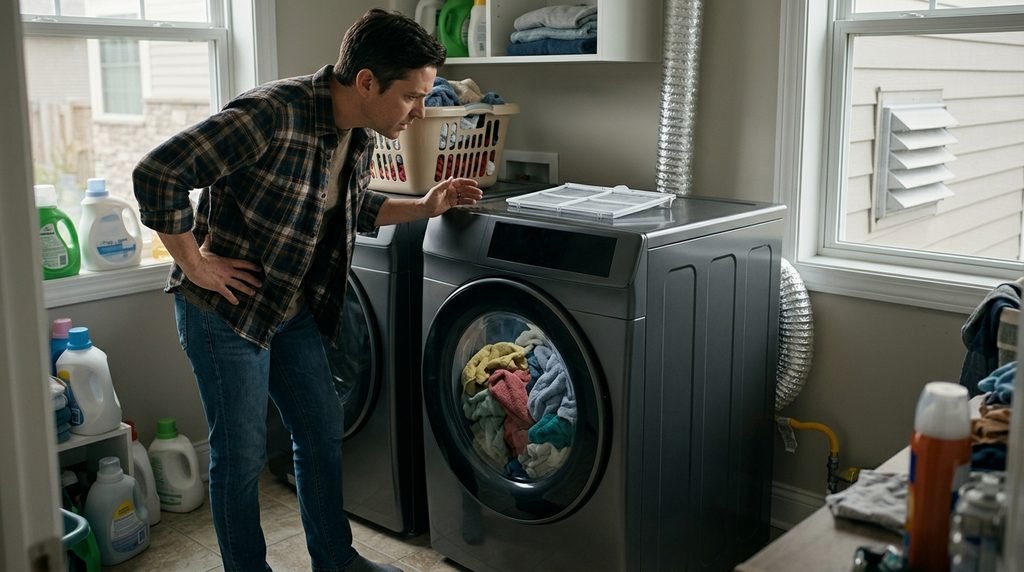
A dryer that starts normally but stops before the clothes are dry may have an airflow, overheating, motor, or control issue.
A restricted exhaust vent is particularly important to investigate because it can reduce airflow and allow heat to build up inside the appliance.
What to look for
- The dryer stops after operating for a short time.
- Clothes remain damp despite a completed cycle.
- The appliance or laundry area becomes unusually hot.
- Drying takes noticeably longer than it used to.
- The dryer works again after cooling down but later stops.
These symptoms do not prove that the motor or thermostat is defective. A ventilation restriction can contribute to overheating, while an aging motor or control fault can also cause interruptions.
Clean the lint screen and check accessible external venting. If the dryer continues to stop, becomes excessively hot, or shows signs of electrical damage, stop using it and arrange a professional diagnosis.
Do not repeatedly restart an overheating dryer to finish a load.
Gas Dryer Takes Too Long to Dry Clothes
Long drying times are not always caused by a failed gas component. In many cases, poor airflow, an overloaded drum, or an unsuitable cycle can be responsible.
Common causes
Lint buildup: Lint can accumulate in the screen, exhaust duct, or other parts of the ventilation system, restricting airflow.
Blocked or crushed exhaust duct: A damaged or obstructed duct can prevent moist air from escaping efficiently.
Overloaded drum: When clothes cannot tumble freely, hot air may not circulate through the load effectively.
Incorrect settings: A low-heat or sensor-based cycle may behave differently depending on the fabric, load size, and moisture level.
Heating-system fault: If the airflow and settings are correct, a problem with the burner or its controls may be preventing normal heating.
How to improve drying performance
Clean the lint screen before or after every load, following the manufacturer’s instructions. Inspect accessible exhaust ducting periodically and arrange a proper vent cleaning when necessary.
Use the recommended duct material and installation method specified by the dryer manufacturer. Keep the duct as free from crushing and unnecessary bends as the installation allows.
If the dryer still takes unusually long to dry clothes after maintenance, have the heating system and internal airflow path inspected. Persistent slow drying can indicate a fault that routine cleaning will not fix.
Gas Dryer Makes Unusual Noises
A gas dryer may make some normal operating sounds, but new or increasingly loud noises can indicate mechanical wear.
Common sources of noise
- Thumping: A heavy load, unevenly distributed clothing, or worn drum-support components may be responsible.
- Squealing: A worn belt, idler pulley, or bearing may create a high-pitched sound.
- Scraping: An object caught in the drum area or a damaged internal component may cause rubbing.
- Grinding: A worn roller, bearing, or motor-related fault may be responsible.
- Rattling: Loose external items or objects in the drum may be the cause.
First, stop the dryer and check the drum for loose objects or items that may be making contact with it. Avoid operating the machine if you hear severe grinding, smell burning, or notice unusual vibration.
Internal parts such as belts, rollers, pulleys, and motor components require access to the appliance’s interior. If you do not have the necessary repair experience, have a technician inspect the machine rather than disassembling it.
Understanding Common Gas Dryer Repair Parts
Knowing what the main components do can help you understand a repair estimate. However, the presence of a symptom does not automatically confirm which part has failed.
Igniter
The igniter helps start combustion in many gas dryers. A failed igniter can result in a burner that does not light, but other ignition-system faults can produce similar symptoms.
Flame sensor
The flame sensor monitors whether the burner has ignited. A faulty sensor can interfere with the heating sequence, although testing is needed to confirm the diagnosis.
Gas valve coils
These electrical coils help operate the gas valve. If they fail or weaken, the burner may not ignite reliably or may stop heating during operation.
Thermal fuse
The thermal fuse is a safety component that can interrupt operation if a particular overheating condition occurs. If it fails, the dryer may stop heating or fail to run, depending on the model.
A blown fuse should not simply be replaced without investigating why it failed. Restricted airflow and other overheating conditions may need to be addressed to prevent the problem from recurring.
Thermostat and control components
Thermostats regulate or monitor temperature, while control boards and related switches manage different operating functions. A failure in one of these components can affect heating, startup, or cycle completion.
Because symptoms overlap, an accurate diagnosis is important before ordering parts.
Should You Repair a Gas Dryer Yourself or Hire a Technician?
The right choice depends on the task, your experience, and the risks involved.
Tasks many homeowners can manage
Provided the manufacturer’s instructions allow it, basic maintenance may include:
- Cleaning the lint screen.
- Checking accessible external exhaust ducting.
- Removing clothing or objects that obstruct normal drum movement.
- Confirming the cycle settings.
- Inspecting the visible power cord and plug without handling damaged wiring.
- Recording error codes and describing the symptoms.
These checks do not require opening the gas system or replacing internal components.
Repairs best left to a qualified professional
Professional service is the safer choice for:
- Gas valve or burner repairs.
- Gas line or connector problems.
- Igniter and flame-sensor diagnosis when internal access is required.
- Internal electrical wiring faults.
- Repeated thermal fuse failures.
- Motor or control-board replacement when specialist testing is needed.
- Repairs involving smoke, scorching, suspected gas leaks, or persistent overheating.
A qualified technician can test components, verify correct operation, and check that the appliance is safe to return to service.
Is Gas Dryer Repair Worth the Cost?
Repairing an existing dryer may be worthwhile, especially if the appliance is relatively new and the fault is limited. Replacing it may make more sense when it is older, has repeated breakdowns, or needs several expensive components.
Consider these factors before deciding.
The age and condition of the dryer
A well-maintained dryer with a long service history may justify a repair. An older machine with recurring mechanical and heating problems may be less attractive to repair.
The estimated repair cost
Ask for an itemized estimate that separates the diagnostic fee, labor, parts, and any additional charges. Compare the total with the price of a suitable replacement, including delivery and installation.
There is no single repair-cost percentage that works for every household. A modest repair may be sensible for an expensive, relatively new dryer, while the same repair could be less attractive for an older unit that has other faults.
Warranty coverage
Check whether the appliance or the relevant component is still covered by a manufacturer warranty or service agreement. Avoid paying for work that might already be covered without first confirming the warranty terms.
Safety and reliability
A repair is not worthwhile if the underlying safety problem remains unresolved. If the dryer has repeated overheating, gas-related faults, or significant internal damage, make the decision based on a qualified assessment rather than price alone.
How to Prepare for a Gas Dryer Repair Appointment
A little preparation can help the technician identify the problem more efficiently.
Before arranging service, write down:
- The dryer’s make and model number.
- Approximately how old the appliance is.
- Whether it starts, tumbles, and produces heat.
- Whether the problem happens immediately or after several minutes.
- Any error codes or indicator lights.
- Any new noises or unusual smells.
- Whether you have already cleaned the lint screen and checked accessible venting.
Describe what actually happens rather than naming a part you believe has failed. For example, “the drum rotates, but the clothes remain cold” is more useful than saying “the igniter is broken” when no diagnostic test has confirmed it.
If you smell gas or notice a potentially dangerous condition, do not run the dryer to gather more information. Follow the appropriate safety steps and get professional assistance.
Frequently Asked Questions About Gas Dryer Repair
Why is my gas dryer running but not heating?
Possible causes include a failed igniter, faulty gas valve coils, a flame-sensor problem, a failed thermostat or thermal fuse, a gas-supply issue, or restricted airflow. The correct cause must be identified through appropriate checks and testing.
Can a gas dryer run if the gas supply is interrupted?
The motor and controls may still operate because the dryer also uses electricity. Without an adequate gas supply, however, the burner cannot provide normal heat. If you suspect a gas-supply problem, stop troubleshooting and contact a qualified professional.
Is a gas dryer igniter expensive to replace?
The total cost depends on the dryer model, part availability, labor rates, and whether another component has failed. Ask for a diagnosis and itemized estimate before deciding whether to proceed.
How often should I clean the dryer vent?
Clean the lint screen after every load and inspect the exhaust system periodically. The required vent-cleaning frequency depends on usage, the duct layout, and how quickly lint accumulates. If drying times increase or airflow appears restricted, arrange a thorough inspection.
Can a blown thermal fuse cause a gas dryer to stop working?
Yes. Depending on the design, a failed thermal fuse can prevent heating or stop the dryer from operating. The reason for the failure should also be investigated, particularly if restricted airflow or overheating may be involved.
When should I replace rather than repair a gas dryer?
Consider replacement if the appliance is old, repair estimates are high relative to replacement, several components are failing, or reliability and safety remain concerns. Compare the full repair estimate with the cost of a suitable new machine rather than relying on age alone.
Conclusion
Gas dryer repair begins with identifying the symptom and checking the simple, safe possibilities before replacing parts. A dryer that runs without heat may have an ignition problem, a gas-supply issue, a failed safety component, or restricted airflow. A dryer that will not start may have a separate electrical, door-switch, motor, or control problem.
Regular lint-screen cleaning and proper exhaust maintenance can help maintain airflow and reduce overheating risks. Internal gas-system work, persistent electrical faults, and repeated safety-device failures require appropriate professional diagnosis.
Before spending money on parts or a replacement appliance, compare the likely cause, repair estimate, dryer age, warranty coverage, and overall condition. An accurate diagnosis and a safety-first approach are the best starting points for a reliable repair.



[…] power cord, the iQ Perfetto is designed to feel considerably lighter than many traditional salon hair dryers. This can be especially appealing to hairstylists who dry hair throughout the day or home users who […]